
Earthen Interdependence-Ology
Solo BFA Exhibition
On View April 6-11th 2026
Visual Arts Center California State University San Bernardino

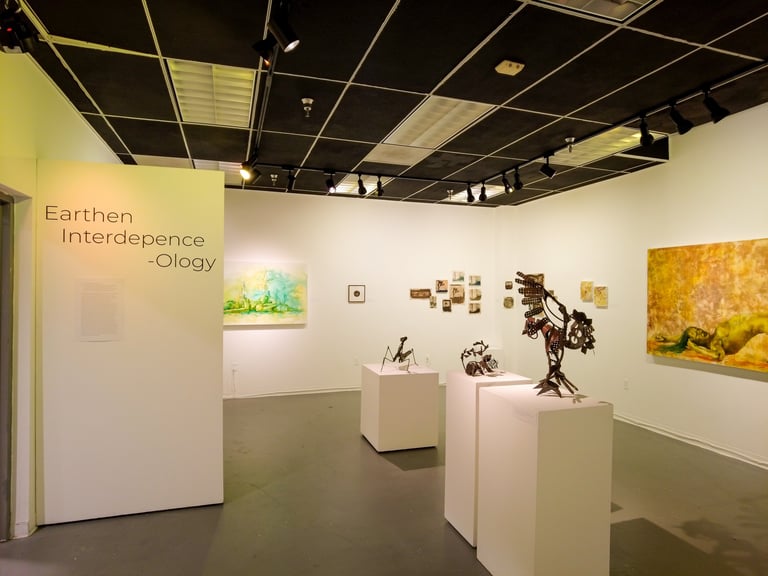
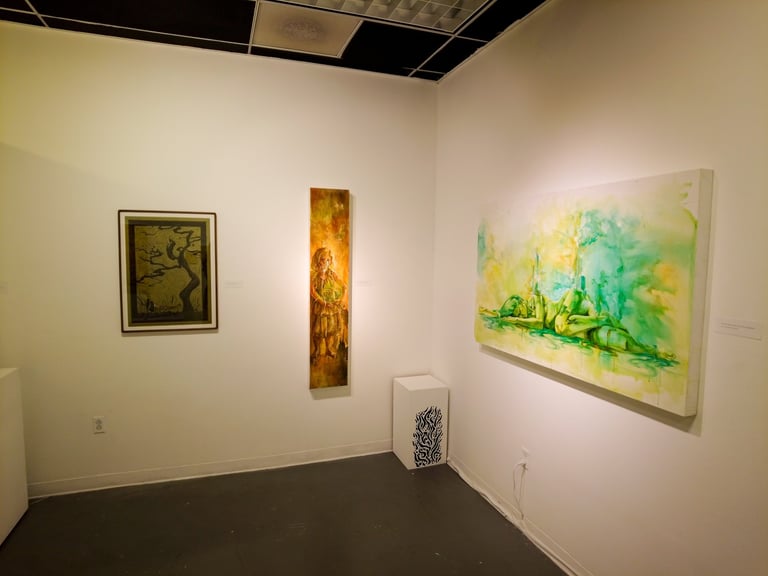

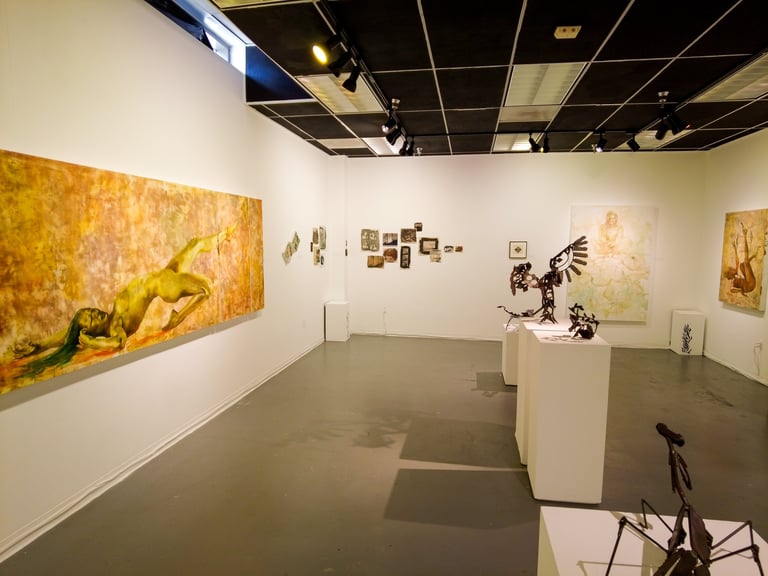

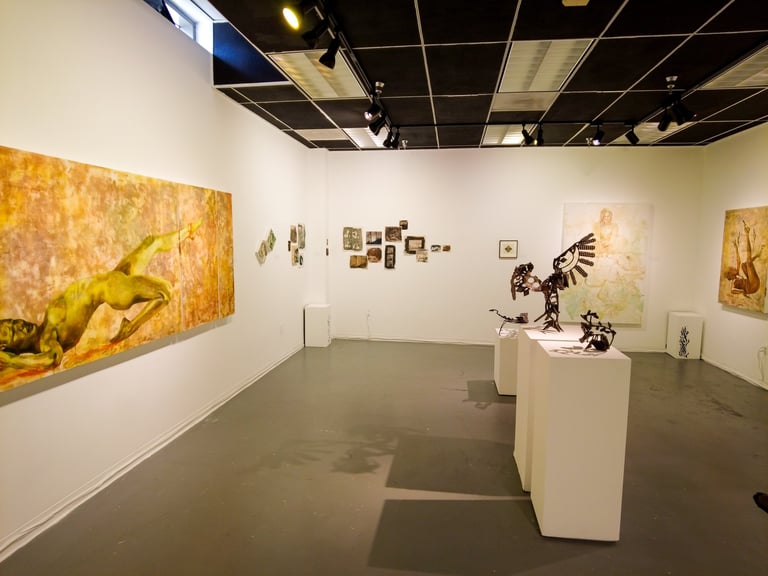
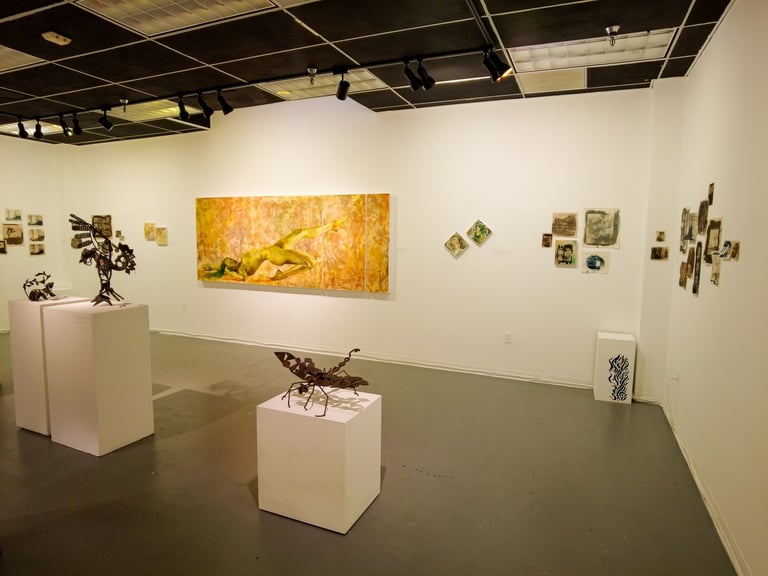




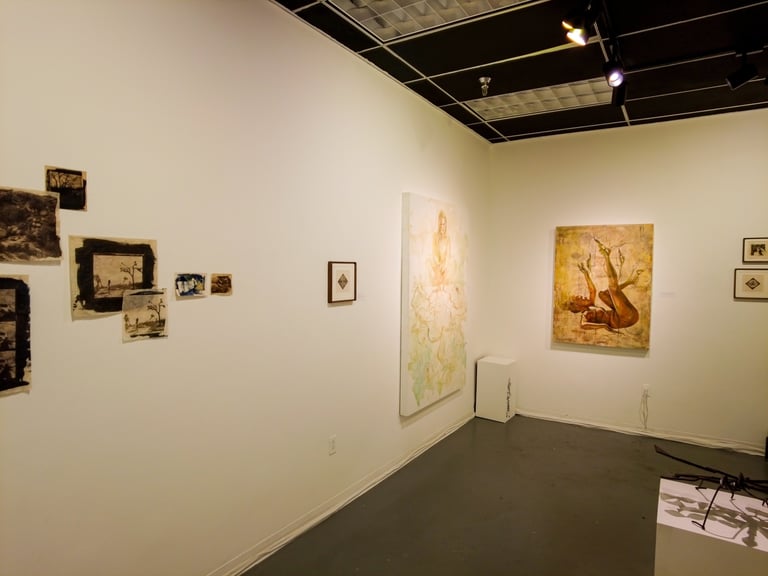

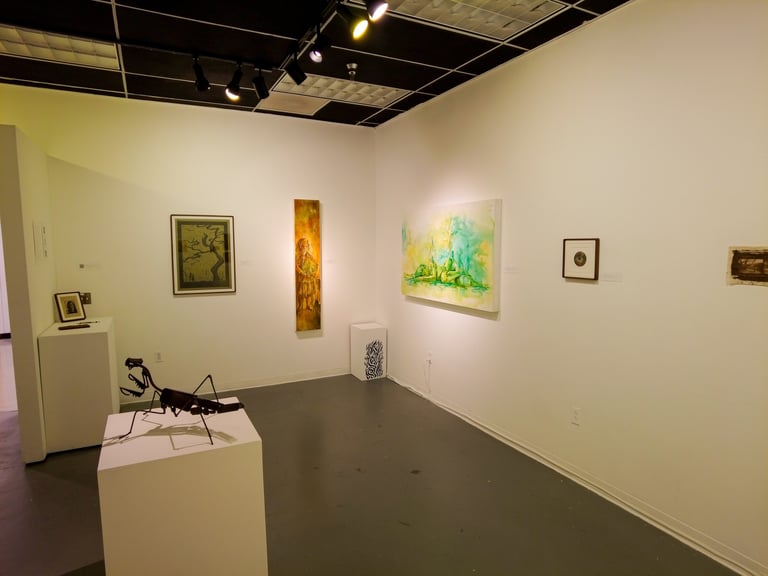
I am full of questions and have very few answers. All I know is what I see: what I mourn and lament for, what I dream and yearn for. All I know are the futures I can prophesy: the road we are on with an impending ecological collapse, and the road we should instead be striving for. All I know is we must face the damage we have done and the part we have played in her destruction before we can even look to change. The patriarchal understandings of ownership through which we have passively watched the resourcification of the earth have become so ingrained that we can no longer empathize with our Earthen Mother. (Resourcification definition: classifying something as for human use only). It feels as if patterns of environmental destruction are something we are inherently part of, a system we are stuck in. I believe that an early bond with the natural world was one that we are all born with, but have gradually forgotten as we are incorporated into this disconnected industrial society. Our Creator delights in the creation that is earth. Our Creator cherishes us. So our affinity for creation should follow. I hold a deep conviction that the earth around us is a gift that we were entrusted to protect, care for, and nurture. Yet, humans still exploit and destroy instead. So where do we go from here? If we consume all she has to offer, if our environment can barely support life, if our mother is more concrete than dirt, what will be left? Have we walked too far down this road? Have we become so complicit in apathy? I want to look towards healing, but feel chained to the human systems we have created, dragged along with our mother to our doom. Do we still care for the earthen gift we were given? I do not know. But I refuse to look away. Instead, I will research. Instead, I will ask questions: of you, of our Creator, of myself. I hold together both lament and a tenuous, yet chosen hope. As I name what is broken, I lift up what remains, and imagine the futures that could be.
Exhibition Statement:
Earthen Interdependence-Ology Definition:
The study of the symbiotic relationship between us and our Earthen Mother. The study of the damage we have inflicted through this connection, while looking towards the care that can be found. It is the study of how human-induced environmental decay will scar us all.
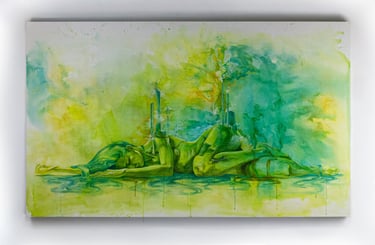
Link to Individual Works:


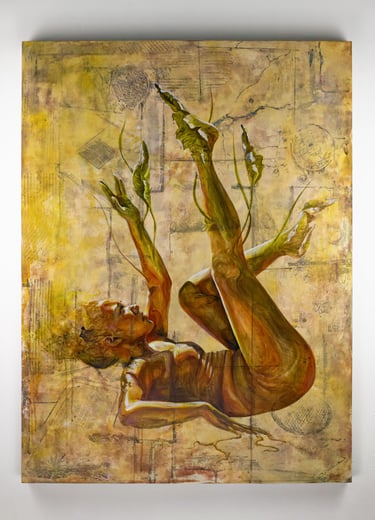


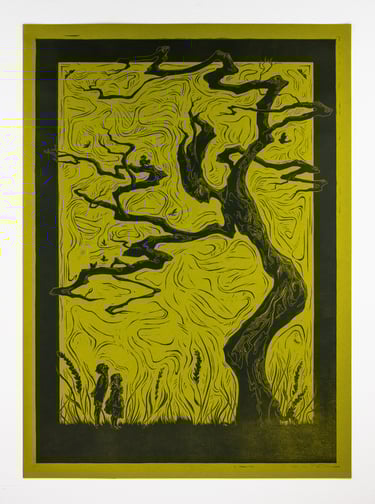

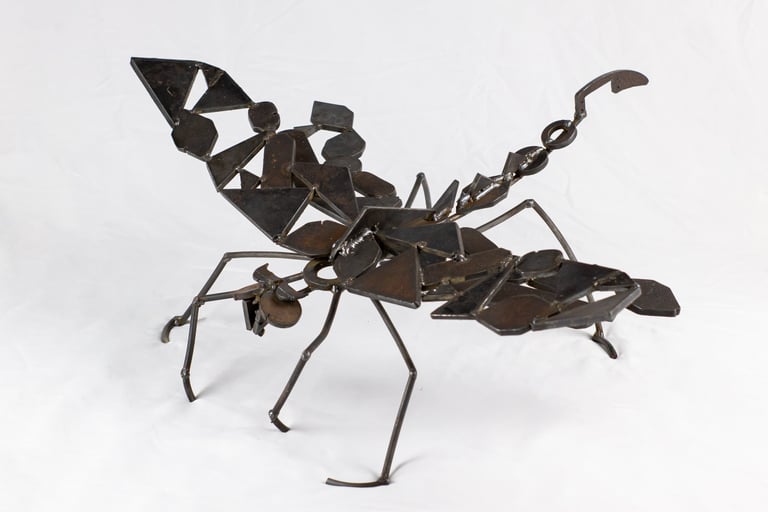


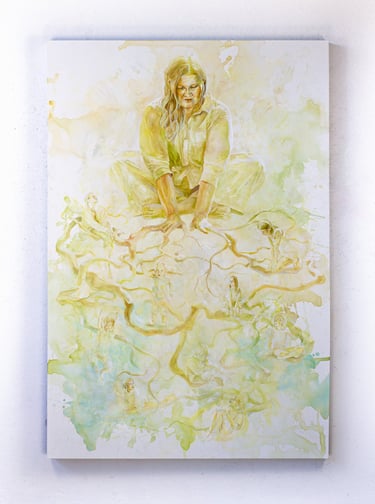


Vocalizations of Response
Soundscape, 1 hour 27 minutes, 2026
Layered spontaneous vocalizations in response to the environment intially shown in a four track audio installation during this Solo Exhibition.
in vocal collaboration with Jillian McCombs.
Earthen Interdependence-Ology Exhibition Research:
NASA. “Arctic Sea Ice Minimum Extent- Earth Indicators.” NASA Science, science.nasa.gov/earth/explore/earth-indicators/arctic-sea-ice-minimum-extent/.
NASA. “Carbon Dioxide- Earth Indicators.” NASA Science, science.nasa.gov/earth/explore/earth-indicators/carbon-dioxide/.
NASA. “Climate Change.” NASA Science, science.nasa.gov/climate-change/.
NASA. “Global Temperature- Earth Indicators.” NASA Science, science.nasa.gov/earth/explore/earth-indicators/global-temperature/.
NASA. “Ice Sheets- Earth Indicators.” NASA Science, science.nasa.gov/earth/explore/earth-indicators/ice-sheets/.
NASA. “Methane- Earth Indicators.” NASA Science, science.nasa.gov/earth/explore/earth-indicators/methane/.
NASA. “Ocean Warming- Earth Indicators.” NASA Science, science.nasa.gov/earth/explore/earth-indicators/ocean-warming/.
NASA. “Sea Level- Earth Indicators.” NASA Science, science.nasa.gov/earth/explore/earth-indicators/sea-level/.
National Centers for Environmental Information. “Latest Monitoring Information.” NOAA, www.ncei.noaa.gov/access/monitoring/products/.
NOAA National Centers for Environmental Information, “Climate at a Glance: National Rankings,”
www.ncei.noaa.gov/access/monitoring/climate-at-a-glance/national/rankings.
National Centers for Environmental Information. “February 2026 Global Climate Report.” NOAA, 2026, www.ncei.noaa.gov/access/monitoring/monthly-report/global/202602.
National Centers for Environmental Information. “Ocean Heat Content Rises.” NOAA www.ncei.noaa.gov/news/ocean-heat-content-rises.
National Centers for Environmental Information. “Ongoing Study of Global Change.” NOAA, www.ncei.noaa.gov/news/ongoing-study-global-change.
National Centers for Environmental Information. “Paleoclimatology Data.” NOAA, www.ncei.noaa.gov/products/paleoclimatology.
NOAA Climate.gov. “Global Climate Dashboard.” Climate.gov, National Oceanic and Atmospheric
Administration, climate.gov/climatedashboard.
NOAA Climate.gov. Graph based on data from Lüthi, D., et al. “High-Resolution Carbon Dioxide Concentration Record 650,000–800,000 Years Before Present.” Nature, 2008, via NOAA NCEI Paleoclimatology Program. Climate.gov, National Oceanic and Atmospheric Administration, www.climate.gov/media/16929.
NOAA Climate.gov. “Climate Change: Atmospheric Carbon Dioxide.” Climate.gov, National Oceanic and Atmospheric Administration, www.climate.gov/news-features/understanding-climate/climate-change-atmospheric-carbon-dioxide.
United Nations. “What Is Climate Change?” UN Climate Change, www.un.org/en/climatechange/what-is-climate-change.
World Meteorological Organization. The Global Climate 2011–2020: A Decade of Accelerating Climate Change. Decadal Reports, WMO-No. 1306, 2023. Web. library.wmo.int/idurl/4/68585.
World Meteorological Organization. State of the Climate 2024 Update for COP29. 2024. Web. library.wmo.int/idurl/4/69075.
World Meteorological Organization. State of the Climate 2025 Update for COP30. 2025. Web. library.wmo.int/idurl/4/69674.
World Meteorological Organization. State of the Global Climate 2024. WMO-No. 1368, 2025. Web. library.wmo.int/idurl/4/69455.